
In this article 7 sections
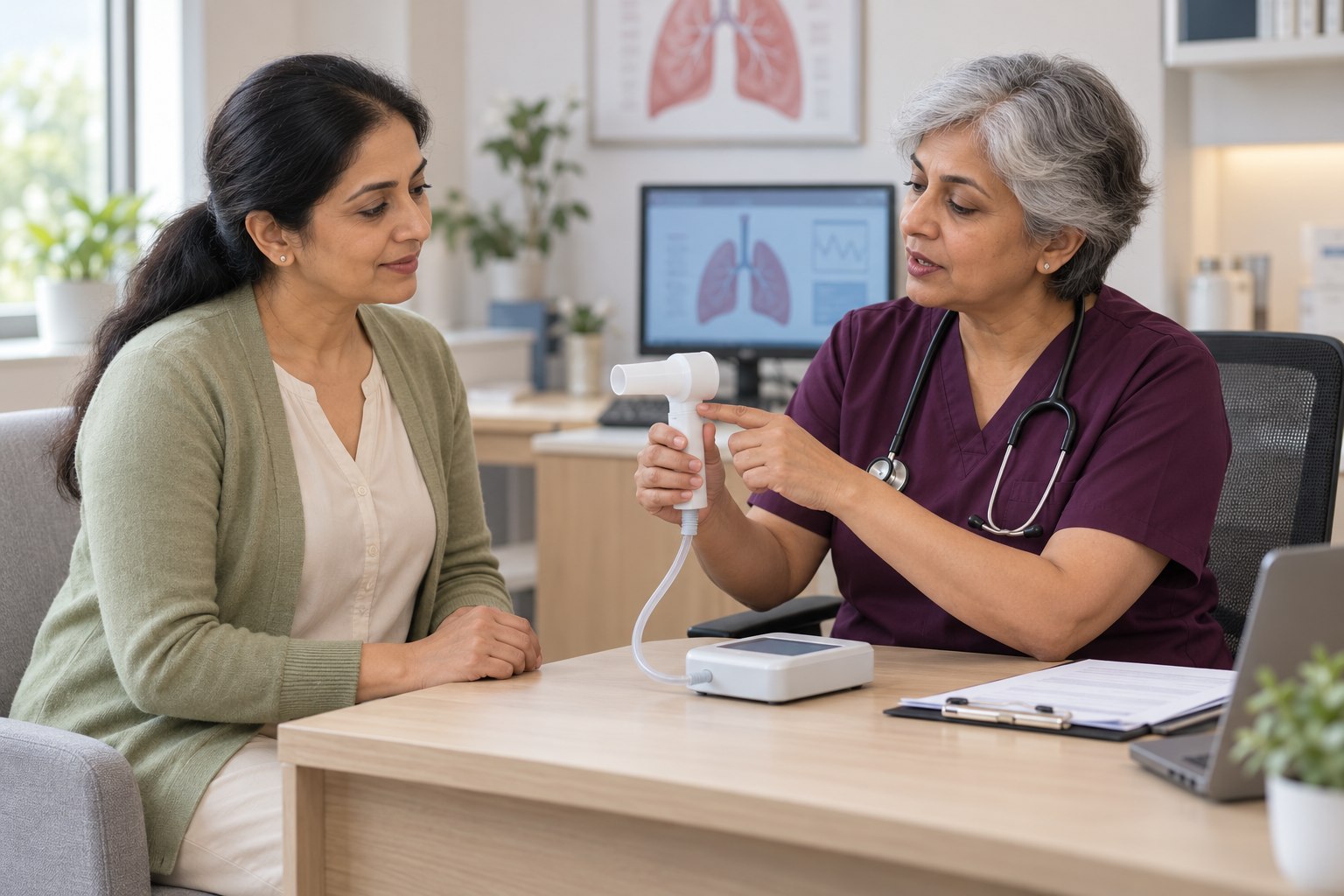
Spirometry is a breathing test that measures how much air you can blow out of your lungs and how quickly you can do it. Your doctor may recommend it if you have a persistent cough, wheezing or breathlessness, or to monitor an existing lung condition.
It is one type of pulmonary function test, often shortened to PFT. A prescription for “PFT” may include spirometry alongside other tests that measure lung capacity or how well gases move from the lungs into the blood.
Why your doctor may recommend it
Symptoms alone do not always explain what is happening inside the airways. Spirometry helps your doctor investigate conditions such as asthma and COPD and assess whether air is moving out of your lungs as expected.
If you already have a diagnosis, repeat testing may help monitor changes and assess treatment. Sometimes spirometry is also requested before surgery to understand your breathing health.
How to prepare for the appointment
Follow the instructions provided by your testing centre. You may be asked to avoid smoking, strenuous exercise, alcohol or a large meal for a specified time before the test. Wear comfortable clothing that allows you to take a full breath.
Ask specifically about your inhalers and other medicines. Some tests require certain inhalers to be withheld temporarily, while others assess your breathing on your usual treatment. Do not stop an inhaler or medicine unless you have been instructed to do so.
Tell your doctor if you have a chest infection, recently had a heart attack or stroke, or have undergone surgery. Forceful breathing may be unsuitable in some circumstances, so the appointment may need to be postponed or adjusted.
What happens during the test?
You will usually sit upright with a soft clip on your nose and your lips sealed around a mouthpiece. After taking the deepest breath you can, you will blow out hard and fast, then keep breathing out until you are asked to stop.
The test is repeated several times, with rests between attempts. This helps check that the measurements are consistent. It can take practice to get the technique right, so ask for the instructions to be repeated if needed.
You may feel briefly tired or light-headed from the effort. Stop blowing and let the person conducting the test know if you become dizzy or uncomfortable.
Understanding FEV1 and FVC
Your report may contain several numbers and graphs. FEV1, or forced expiratory volume in one second, measures the amount of air you blow out during the first second of a forceful breath.
FVC, or forced vital capacity, measures the total amount of air you blow out during that complete effort, after taking a full breath in. These measurements describe different parts of the same breathing manoeuvre.
The FEV1/FVC ratio compares the first-second amount with the total. A lower-than-expected ratio can suggest airflow obstruction, meaning air has difficulty moving out through the airways. Your doctor considers the whole report when deciding what this means.
What do “predicted” values mean?
Lung size and breathing measurements naturally differ between people. Reference values take factors such as age, height and sex into account. Your measured results are compared with these expected values and their normal range.
A result below the predicted average is not automatically abnormal. Equally, a percentage on the report should not be read as the percentage of your lungs that is “working.” It describes a measurement compared with a reference value, rather than a direct measurement of lung damage.
Why might the test be repeated after an inhaler?
You may be given an inhaled medicine called a bronchodilator, which relaxes the muscles around the airways. After a short wait, the breathing test is repeated to see whether airflow improves.
This comparison helps your doctor assess how your airways respond to the medicine. It is considered alongside your symptoms, medical history and other findings when deciding on a diagnosis and treatment.
What happens after the results?
A low FVC can have several explanations, including difficulty completing the test correctly. It may also suggest that further testing of lung volumes is needed. Spirometry alone cannot confirm every type of lung problem.
Your doctor will explain whether the results support a diagnosis, whether treatment needs reviewing and whether more tests are necessary. Keep a copy of the complete report, including any measurements taken before and after the inhaler, so it is available for comparison at future appointments.