
In this article 7 sections
A home blood pressure monitor can make regular checks easier, but the numbers are only useful when they are measured properly. A rushed reading after climbing the stairs may tell a different story from one taken after a quiet rest. Learning a consistent routine helps you and your doctor understand the pattern more clearly.
Choose a monitor that suits you
An automatic monitor with a cuff that fits around the upper arm is usually the recommended choice. Look for a model that has been independently validated for accuracy. A familiar brand or a digital display alone does not confirm that a device has been properly tested.
Cuff size matters too. Check the arm measurements listed by the manufacturer rather than assuming one cuff fits everyone. Ask your doctor for help choosing a suitable device, especially if it will be used during pregnancy or for a child. Take it to an appointment so your technique and its readings can be checked.
Give yourself time to settle
Avoid smoking, caffeine and exercise for at least 30 minutes before measuring. Empty your bladder, then sit quietly for five minutes. This pause is part of the measurement, not an optional extra to skip when you are busy.
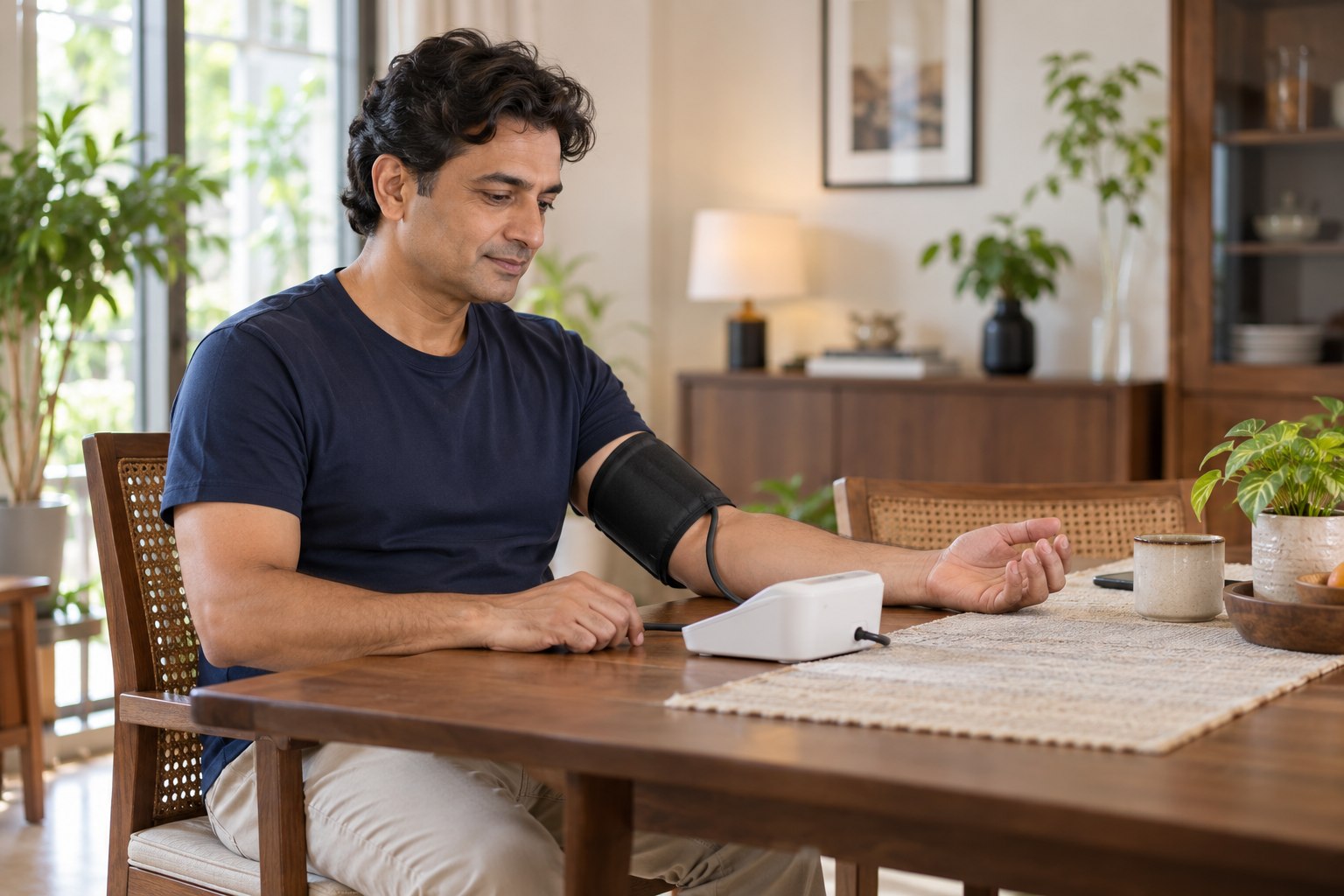
Choose a chair with back support and a table where you can comfortably rest your arm. Keep both feet flat on the floor and your legs uncrossed. Try to use the same quiet setting each time.
Position the cuff and arm correctly
Place the cuff against bare skin on your upper arm, following the monitor's instructions. Support your arm so the cuff is at heart level. An arm hanging by your side, crossed legs or a cuff over clothing can affect the result.
Stay still and avoid talking while the cuff inflates and releases. If a family member helps, ask them to wait until the reading is finished before discussing the numbers.
Take two readings and follow an agreed schedule
Take a reading, wait at least one minute, then take another. Record both results. The second may differ from the first, which is one reason a pair of measurements is more useful than a single number.
Your doctor may ask for morning and evening readings over several days, particularly when assessing your blood pressure or reviewing treatment. Ask exactly when to measure and for how long. A short assessment schedule does not automatically mean you need to check twice daily indefinitely. Follow the instructions for your particular monitor as well.
Keep a record that is easy to review
Write down both numbers from each reading, together with the date and time. A notebook or a simple digital record is enough. Include a brief note about symptoms or an unusual circumstance, such as taking the measurement immediately after arriving home.
Keep the full record, including readings that surprised you. If several relatives share a monitor, label each person's results clearly. Bring the record and your current medicine list to appointments so your doctor can review them together.
Let the pattern guide your conversation with the doctor
A home monitor supports your care; it does not replace medical appointments. Do not stop, increase or reduce prescribed medicines because of one reading. Follow any adjustment plan already agreed with your doctor, and ask for advice if the instructions are unclear.
If readings repeatedly fall outside the range your doctor gave you, contact them rather than waiting for your next routine review. Ask in advance which results should prompt a call and what to do outside clinic hours.
Know when a reading needs urgent attention
For adults who are not pregnant, a top number of 180 or higher, or a bottom number of 120 or higher, needs prompt attention. If you have no concerning symptoms, rest quietly and repeat the measurement after at least one minute. If it remains this high, contact a doctor immediately for advice.
Chest pain, severe breathlessness, sudden weakness, difficulty speaking or a sudden change in vision require emergency medical help. Do not delay help to take more readings. During pregnancy or after a recent birth, follow the separate monitoring and urgent-care instructions given by your doctor rather than relying on these thresholds.