
In this article 7 sections
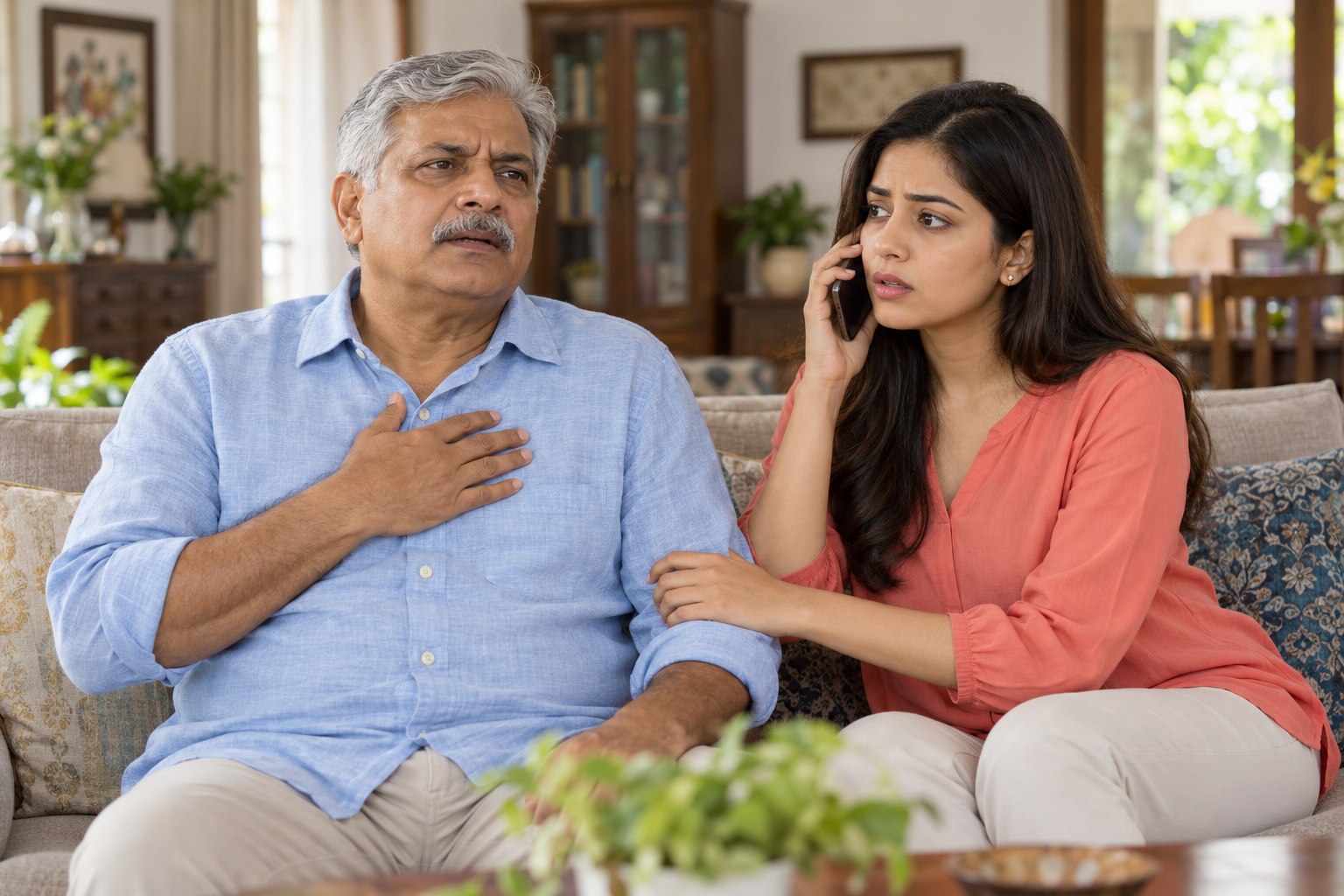
If you think you or someone nearby may be having a heart attack, call 112 in India immediately. Do not wait until you are certain, and do not drive yourself to hospital. Getting help quickly can limit damage to the heart and save a life.
A heart attack happens when blood flow to part of the heart becomes blocked, usually by a blood clot. Without enough oxygen, the heart muscle can become damaged. It needs emergency treatment, even when the symptoms seem mild or do not match what you have seen in films.
Chest discomfort is not always severe pain
A heart attack may cause pressure, tightness, heaviness, squeezing or an uncomfortable fullness in the chest. Some people describe a burning sensation or something that feels like indigestion. The discomfort may continue or ease and then return, so a temporary improvement does not make it safe to ignore.
Pain or discomfort can also spread to one or both arms, the shoulders, back, neck, jaw or upper abdomen. It does not have to involve the left arm. New or unusual discomfort, especially when accompanied by other warning signs, needs urgent attention.
Other symptoms can appear alongside it
Breathlessness, a cold sweat, nausea, vomiting, dizziness or sudden unusual weakness can occur during a heart attack. Breathlessness may happen even without chest discomfort. Some people notice several symptoms together, while others have only one or two.
Do not wait for every warning sign to appear before asking for help. A heart attack can begin gradually, and its severity cannot be judged simply by how much pain a person describes. Symptoms can also differ from those experienced during a previous heart attack.
Symptoms may be less obvious in some people
Chest pain or discomfort remains the most common heart attack symptom in both women and men. However, women may also experience breathlessness, nausea, back or shoulder discomfort, or unusual tiredness. These symptoms should not automatically be put down to stress or exhaustion.
Older adults and people with diabetes are more likely to have a heart attack with mild symptoms or without obvious symptoms. This is sometimes called a silent heart attack. The absence of strong chest pain does not rule out a serious problem when someone suddenly becomes unwell.
What to do immediately
Stop what you are doing and call 112 for emergency medical assistance. Explain the symptoms, when they started and your exact location, including a nearby landmark if helpful. Follow the emergency operator’s instructions rather than waiting for a routine appointment or trying to arrange an online consultation.
An ambulance allows emergency treatment to begin before arrival at hospital. Do not drive yourself, and do not postpone the call while trying home remedies or checking whether the discomfort will settle. You do not need to diagnose a heart attack yourself before seeking help.
While help is on the way
Sit and rest in a comfortable, supported position. If you are helping someone, stay with them and watch for changes in their responsiveness and breathing. Tell the emergency staff about any known medical conditions, medicine allergies and regular medicines.
Aspirin may be advised for a suspected heart attack, but it is not suitable for everyone. Follow emergency medical instructions; if there is uncertainty about whether it is appropriate, wait for that advice. Never delay calling for help while looking for medicines.
If the person collapses
If an adult becomes unresponsive and is not breathing normally, or is only gasping, call 112 on speakerphone and start CPR immediately. This may be cardiac arrest, which can happen during a heart attack. Ask another person to bring an automated external defibrillator, or AED, if one is nearby.
If you are not trained in rescue breaths, give continuous chest compressions. With the person on a firm surface, place one hand over the other in the centre of the chest and push hard and fast, about 5–6 cm deep at 100–120 compressions a minute. Let the chest rise fully between pushes and follow the emergency operator’s instructions.
Use an AED as soon as one is available and follow its spoken directions. Continue CPR until emergency help takes over or the person starts breathing normally, unless you become physically unable to continue. CPR is for someone who is unresponsive and not breathing normally, not someone who is awake with chest pain.
What happens at hospital?
A doctor will assess the symptoms and usually arrange an ECG, which records the heart’s electrical activity, along with blood tests such as troponin. Troponin can rise when heart muscle is damaged. Blood tests may need repeating because changes can develop over time.
Further tests and treatment depend on what the assessment shows. Tell the doctor when symptoms began, whether they changed and what medicines were taken. If records or prescriptions are readily available, bring them, but do not delay emergency care to collect them.